In Indian taxation, the rules for “setting off” capital losses are specific.
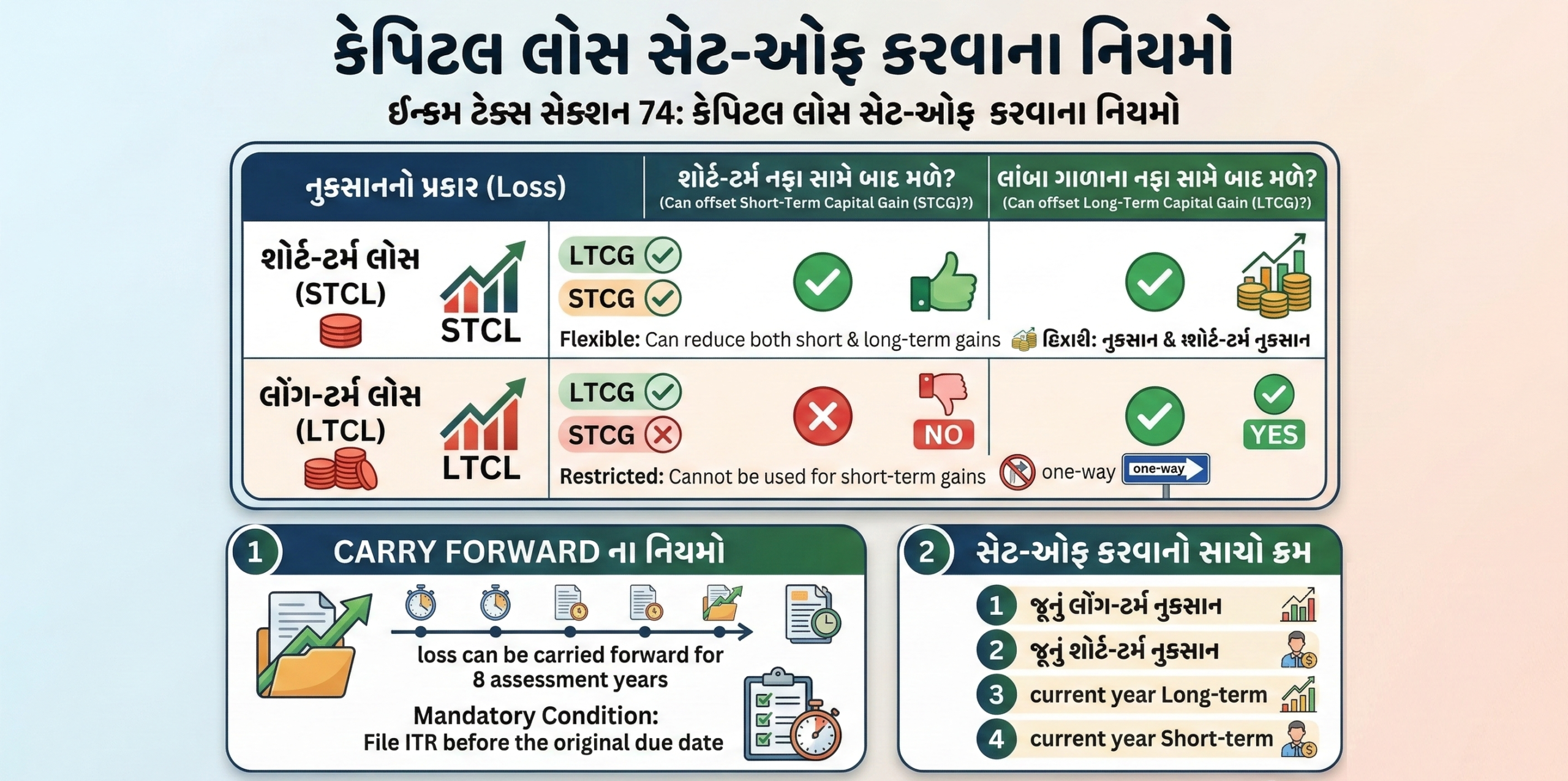
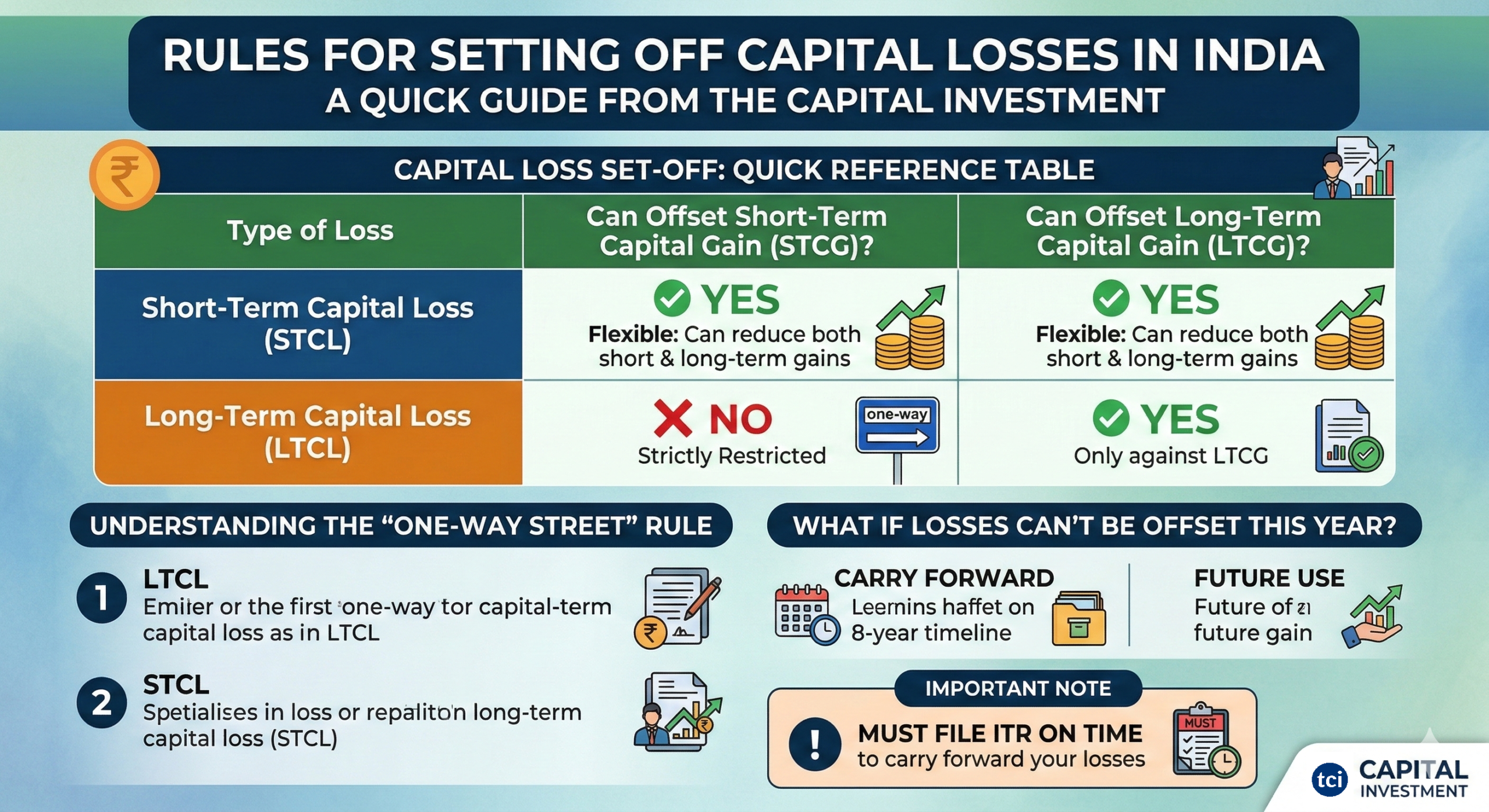
No, we cannot set off a Long-Term Capital Loss (LTCL) against a Short-Term Capital Gain (STCG).
The tax laws follow a “one-way street” logic regarding long-term losses. Here is the breakdown of how these offsets work:
1. The Rule for Long-Term Capital Loss (LTCL)
A Long-Term Capital Loss is restricted. It can only be set off against Long-Term Capital Gains. It cannot be used to reduce your tax liability on short-term gains or any other income (like salary or business profit).
2. The Rule for Short-Term Capital Loss (STCL)
Short-term losses are more flexible. A Short-Term Capital Loss can be set off against both Short-Term Capital Gains and Long-Term Capital Gains.
Comparison Table: Set-Off Rules
| Type of Loss | Can offset Short-Term Gain? | Can offset Long-Term Gain? |
| Short-Term Loss (STCL) | ✅ Yes | ✅ Yes |
| Long-Term Loss (LTCL) | ❌ No | ✅ Yes |
What if you can’t offset the loss this year?
If your Long-Term Capital Loss exceeds your Long-Term Capital Gain in a specific financial year, you don’t lose that benefit forever:
- Carry Forward: You can carry forward the remaining loss for up to 8 assessment years.
- Future Use: In those future years, the carried-forward LTCL can still only be set off against Long-Term Capital Gains.
Important Note: To carry forward these losses, you must file your Income Tax Return (ITR) before the original due date.